Revista de la Facultad de Ciencias
Agrarias. Universidad Nacional de Cuyo. Tomo 55(1). ISSN (en línea) 1853-8665.
Año 2023.
Original article
Indicators of restoration strategies in
land uses: metallic and non-metallic
elements
Indicadores de estrategias de restauración en usos de suelo:
elementos metálicos y no metálicos
Jorge Alonso Alcalá Jáuregui
1*
Yadira López Mendoza 1
Juan C. Rodríguez Ortíz 1
María Flavia Filippini 2
Eduardo Martínez Carretero
3
Gabriela Moreno 3
Alejandra Hernández Montoya
1
Ángel Natanael Rojas Velázquez
1
Felix Alfredo Beltrán Morales
4
1 Universidad Autónoma de
San Luis Potosí. Facultad de Agronomía y Veterinaria. Carretera San Luis Potosí
- Matehuala Km. 14.5 Ejido Palma de la Cruz. C. P. 78321. Soledad de Graciano
Sánchez. San Luis Potosí. México.
2 Universidad Nacional de
Cuyo. Facultad de Ciencias Agrarias. Química Agrícola. Almirante Brown 500.
M5528AHB. Chacras de Coria. Mendoza. Argentina.
3 IADIZA-CONICET.
Geobotánica y Fitogeografía. Mendoza. Argentina. Universidad Nacional de San Juan. Facultad
de Cs. Exactas, Físicas y Naturales. San Juan. Argentina.
4
Universidad Autónoma de Baja California Sur. Carretera Sur. km 5.5. Colonia El Mezquitito.
La Paz. Baja California Sur. México.
*jorge.alcala@uaslp.mx
Abstract
Land management practices can have an impact on the environmental
quality of soil and contribute to identifying the source of its pollution. The
objective of this study was to determine presence of metallic and non-metallic
elements as indicators of land use impact (livestock management, restoration
strategies and without management practices) in the Monte Caldera communal
lands located in Cerro de San Pedro, San Luis Potosi, Mexico. Eighteen samples
were collected at depths of 0-10 cm and 10-20 cm for each land use. Total
concentrations of Zr, Sr, U, Th, Pb, As, Rb, Cr, V,
Ti, Zn, and Cu were determined by X-ray fluorescence. Mean concentrations
ranged in the following order: Ti>Zr>Rb>V>Sr>Zn>Cr>Pb>Cu>Th>U>As, with concentrations for Ti, Cr, Th, U and As exceeding
technical reference values for phytotoxic soils. Significant differences were
evidenced by ANOVA between land use (Th, Pb, Rb, Cu) and soil depth (U, Pb, and
As). Land use practices associated with restoration
resulted in a positive environmental impact. These findings underscore the need
to conduct follow-up studies in the area and further examine the relationship
of such practices with other environmental factors.
Keywords: Soil organic matter; Soil depth;
Land use; Phytotoxic.
Resumen
Las prácticas de manejo
del suelo pueden impactar la calidad ambiental de este recurso y pueden ayudar
a diagnosticar la fuente de su contaminación. El objetivo de este estudio fue
determinar la presencia de elementos metálicos y no
metálicos como indicadores de impacto en el uso del suelo (manejo ganadero,
estrategias de restauración y prácticas sin manejo de suelo) en el Ejido Monte
Caldera (Cerro de San Pedro) San Luis Potosí, México. En cada uso de suelo se
recolectaron 18 muestras por uso de suelo entre 0-10 cm y 10-20 cm de
profundidad. Aplicando la Técnica de Rayos X de Fluorescencia se determinaron
las concentraciones totales de Zr, Sr, U, Th, Pb, As, Rb, Cr, V, Ti, Zn y Cu.
Las concentraciones medias obtenidas fluctuaron a razón de
Ti>Zr>Rb>V>Sr>Zn>Cr>Pb>Cu>Th>U>As. En Ti, Cr,
Th, U y As se superaron las referencias técnicas de concentraciones en suelo
consideradas a nivel fitotóxico. La prueba de ANOVA reveló una diferencia
significativa entre uso de suelo (Th, Pb, Rb, Cu) y profundidad (U, Pb y As).
El uso de suelo con prácticas asociadas a la restauración indica impacto
ambiental positivo. Se identifica la necesidad de realizar estudios de
seguimiento en la zona y su asociación con otros factores ambientales.
Palabras clave: Materia orgánica del suelo; Profundidad del suelo; Uso de suelo; Fitotóxico.
Originales:
Recepción: 03/08/2022
Aceptación: 23/03/2023
Introduction
By assessing the presence of pollutants, land management strategies can
reflect soil environmental quality. Unsustainable land management has led to
critical levels of physical, chemical, biological, and ecological degradation
of soil, at times reducing or eliminating the quality and primary functions of
this resource (24, 32). Pollution stands
out among the forms of chemical degradation, considering the concentration of
heavy metals in soil as an indicator of its chemical conditions (11, 24, 38). The term “heavy
metal” refers to a range of metals and metalloids with an atomic density
greater than 4 g cm-3;
some with concentrations ranging from 0.1 to 18 mg kg-1 (7,
25, 30). Over 20 million hectares of soil worldwide are polluted with
metallic and non-metallic elements, most notably As, Cd, Cr, Hg, Pb, Co, Cu,
Ni, Zn, and Se (9, 33). X-ray
fluorescence (XRF) was among the approaches and devices used in this study to
facilitate determinations. XRF spectrometry is an analytical method for
determining the elemental composition of various materials. In soils, portable
X-ray fluorescence (pXRF) spectrometry provides a wide range of pedagogical,
environmental, and agronomic applications. Specifically, soil characterization
by pXRF involves a comprehensive determination of its elemental composition
(nutrients, trace elements, and rare-earth elements). XRF provides a rapid,
cost-effective, and residue-free assessment of soil properties that allows for
assessment of a more significant number of samples and a more in-depth
characterization for different purposes (22, 33, 36). A number of studies in the literature have
reported on the determination of Ti, V, Cr, Mn, Ni, Cu, Zn, Zr, Sr, Rb, Pb, and
Th contents using this technique (33, 35, 36, 41).
In Mexico, the toxicity and abundance of some of these elements,
primarily due to increasing mining activities, have turned heavy metal
pollution into a growing concern, particularly in the states of Zacatecas,
Queretaro, Hidalgo, and San Luis Potosi (15). Sierra de Alvarez is critical to San Luis Potosi due to its diverse
climate and vast variety of vegetation in its temperate, arid, mountainous, and
sub-humid landscapes. Predominant soil types include Eutric Lithosol, Haplic
Luvisol, Rendzina, and Luvic Phaeozem. The intrinsic effects of agriculture,
livestock production, and mining activities practiced (20) there have had a dramatic impact on the state of the environment and
are reflected in the decline in ecosystem services (29). Given the human influence on land use, this area has been of interest
for soil restoration plans since 2004 under the Mexican Environmental
Compensation Program (CONAFOR) (14). Our study was conducted in the communal lands of Monte Caldera, within
the municipality of Cerro de San Pedro, San Luis Potosi, to assess presence of
metallic and non-metallic elements as indicators of the environmental impact of
land uses and evaluate remediation strategies for polluted soil. Approaches to
the restoration of soil quality include conservation agriculture, integrated
nutrients, continuous management of vegetation cover, cover
crops, diversified land use, controlled grazing, and optimal seeding rates,
among others (24). To assess the
impact on soil quality and determine the degree of restoration in the area
under study, we examined the characteristics of land use, i.e. livestock
production, restoration practices (sites with mechanical practices,
specifically the formation of terraced reforestation with Pinus greggii,
and livestock exclusion), and overgrazed land without management or
conservation practices.
Materials and methods
The research was conducted in the communal land of Monte Caldera, which
is part of the Cerro de San Pedro municipality in the state of San Luis Potosi,
Mexico. Monte Caldera is located at 100°44’4” west longitude; 22°12’31” north
latitude; at 2080 meters altitude (17, 21).
Biotic Characterization
The predominant climate in Monte Caldera is temperate semi-arid. Average
annual temperature in the study area is 16.8 °C with an annual rainfall of 304
mm. The municipality of Cerro de San Pedro is located in El Salado hydrological
region (HR 37), which essentially consists of a series of small endorheic
basins (Cuenca San Jose, Los Pilares, and others). The region is bordered by a
massif of sedimentary rocks with primarily pine-oak vegetation, induced pasture,
and grassland use in the upper part (21). The soil types present are Lithosol, Chromic Luvisol, Calcareous
Regosol, and Mollic Planosol (26).
Site Selection
The assessment was conducted consecutively in July
2018 with a completely random sampling of three land uses: 1) Land use with
managed livestock production; 2) Land use with restoration practices, i.e.,
land implementing soil rehabilitation measures established in 2004 under
CONAFOR, with reforestation with Pinus greggii and fencing (14), and 3) Land without livestock management or
conservation activities, corresponding to continuous grazing. Each land use was
georeferenced in the field with a global positioning system, considering a
total area of 1,124 ha (Figure
1).
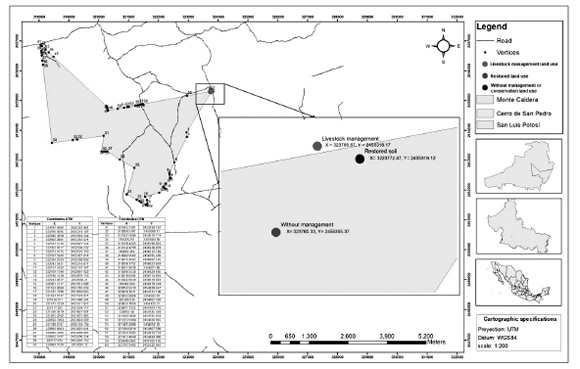
Figure 1: Study area.
Figura 1: Área de estudio.
Soil physicochemical characteristics
Six sampling points were selected for all three land-use practices
studied, 15 to 20 meters apart from one another and completely randomly
collected. Six samples and three replicates were collected for each land use at
each sampling point using two depth criteria: 0-10 cm and 10-20 cm, reaching 36
samples in total. Soil properties were analyzed using the techniques
established in the Mexican Official Standard NOM-021-SEMARNAT-2000 (13, 18). Analyses of pH, texture, soil organic
matter (SOM), electrical conductivity (EC), and cation exchange capacity (CEC)
were performed in triplicate for each sampling site. Total concentrations of
Zr, Sr, U, Th, Pb, As, Rb, Cr, V, Ti, Zn, and Cu were
calculated using X-ray fluorescence with a Thermo Scientific Niton TM FXL instrument
(Thermo Fisher Scientific, Waltham, MA., USA). The results for each sample were
based on the average of three replicates with a 60-second analysis time. An
internal calibration of the instrument was performed before analyzing the
samples, using standard reference soil material from the National Institute of
Standards and Technology (NIST). The procedure was performed in accordance with
manufacturer’s instructions and recommendations of the U.S. Environmental
Protection Agency (EPA) SW-846 Test Method 6200 (39,
40, 41).
Statistical analysis
Minitab 16 Statistical Software (Minitab Inc., State College, PA., USA)
was used for data analysis. A model was designed considering the effect of land
use factors and soil depth on 12 metallic and non-metallic elements,
determining the SOM, EC, and CEC soil indicators with Pearson’s correlation
coefficient, ANOVA (Tukey’s test, p≤0.05) and a Principal Component Analysis
(PCA) for mean comparisons. To minimize error, readings of the soil samples
were made in triplicate.
Results and discussion
The average SOM behavior of all samples assessed was
4.14%, EC was 0.33 mS cm-1,
and CEC was 15.86 Cmol kg-¹.
The pH ranged from 6.5 to 7. The soil textures found ranged from loam
(Livestock management) to silt and clay loam (Restored soil), and to loam and clay
loam (Land without management or conservation). Overall mean values for the 12
elements were as follows: Ti (3,839.1 mg kg-1)
> Zr (518.2 mg kg-1)
> Rb (111.19 mg kg-1)
> V (79.83 mg kg-1)
> Sr (72.33 mg kg-1)
> Zn (60.84 mg kg-1)
> Cr (42.60 mg kg-1)
> Pb (19.64 mg kg-1)
Cu > (17.13 mg kg-1)
> Th (11.51 mg kg-1)
> U (6.94 mg kg-1)
> As (6.13 mg kg-1).
Table 1 illustrates
the mean soil concentrations of these elements. Cr, U, and Th values exceeding
the technical reference values for concentrations considered phytotoxic are
marked as relevant (1, 19, 31).
Table 1: Mean concentrations of metallic and non-metallic
elements in soils and reference values (n=36).
Tabla 1: Relación de concentraciones medias de elementos metálicos y no
metálicos en suelos y niveles de referencia (n=36).
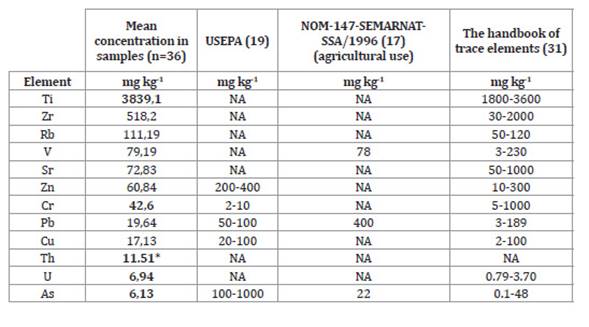
Note: Mean metal concentrations refer to
the total samples from the different land uses evaluated. NA=Data is not
available in the technical reference. * Mean soil concentration of Th is 6 mg
kg-1
(1).
Nota. Los
niveles de concentraciones medias de metales refieren el total de muestras de
los diferentes usos de suelo evaluados. NA. Dato no disponible en la referencia
técnica. La concentración media de Th en suelo es de 6 mg kg-1(1).
Several works
in the literature have reported varying concentrations of U and Th in soils in
countries such as the United States, Canada, Germany, Jamaica, Cuba, India, and
Egypt (17).
Considering the values presented in Table
1, it is worth noting that the Th contents
measured in our study were within the means reported for soils in the United
States (2.2-21 mg kg-1), Canada (4.2-14.1 mg kg-1), Germany (0.4-15 mg
kg-1), Jamaica
(0.9-25 mg kg-1),
and Cuba (5-12.3 mg kg-1).
The mean values for U in soil obtained in this study were consistent with those
obtained for soil from the United States (0.3-10.7 mg kg-1),
Germany (0.42-11 mg kg-1),
and Jamaica (0.7-14 mg kg-1).
The presence of any element at higher or lower concentrations in a given soil
is strictly contingent on its mineral composition, nature of the original
sediments, and depositional environment (18). There were 113 interactions, 20 of which were significant
according to Pearson’s correlation coefficient (p≤0.05, Table
2).
Table 2: Relationship between metallic and non-metallic elements and soil
physicochemical characteristics.
Tabla 2: Relación entre elementos metálicos y no metálicos y propiedades
fisicoquímicas del suelo.
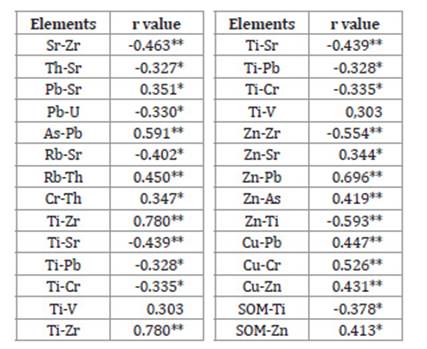
* Indicates statistically significant
relationships (p≤0.05).
Note: Values with ** refer to highly
significant r values, those with * to significant r values.
* Indica relaciones estadísticamente significativas (p≤0,05).
Nota:
Valores con ** se refieren a r altamente significativa, valores con * se
refiere a r significativa.
Clay, calcium carbonate, SOM, and pH are among the
constituents or properties that contribute to the presence of these elements in
soil (39).
Heavy metals exist in most soils as carbonates, sulfides, oxides, or salts, and
their concentrations may vary from soil to soil (35). In our study, however, significant correlations
(p≤0.05) with positive or negative signs were observed for the SOM, EC, and CEC
soil parameters, with the highest values being those recorded between SOM-Zn
(r=0.41) and SOM-Ti (r=-0.37). In turn, pH and organic carbon had the most
significant influence on the solubility of metals (34). In other studies, soil chemical properties such as
pH and EC have been found to vary depending on practices such as forest use and
conservation. Their effect can be explained by an increase in soil cover, which
decreases with the intensity of agricultural use (10). In addition, positive relationships have been
observed among elements such as Fe, Cr, Mn, Ni, As, Cu, and Zn, As, and Cr and
between these elements and soil constituents or properties such as clay,
calcium carbonate, organic matter and pH (39).
Tukey’s test (p≤0.05) showed significant differences
in Th, Pb, Rb, and Cu among the means for the different land uses analyzed by
our study (Figure 2).
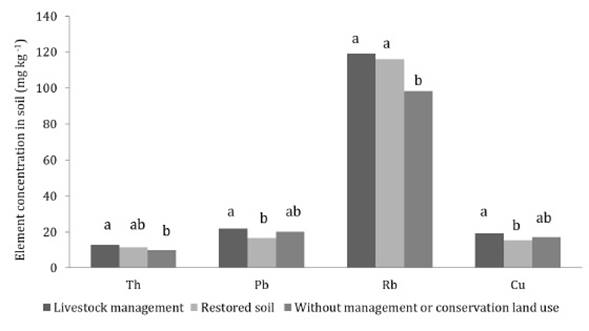
Different letters indicate significant
differences.
Medias
que no comparten una letra son significativamente diferentes.
Figure 2: Mean
values among significant element concentrations in relation to land use
(p≤0.05, n=36).
Figura 2: Medias de los elementos con concentraciones significativas según
usos de suelo (p≤0,05, n=36).
The samples corresponding to livestock management had
the most significant mean values for Th (12.97 mg kg-1),
Pb (22.0 mg kg-1),
Rb (119.12 mg kg-1),
and Cu (19.21 mg kg-1).
In like manner, SOM concentrations were significant at a rate of 4.74% in
restored soil, 3.97% in livestock management, and 3.31% for areas without
management or conservation. Specifically, SOM (humic and fulvic acids) in soil
is a component with a high sorption capacity for heavy metals, impacting their
immobilization (23, 28).
A difference of 4 mg kg-1 in copper (Cu) content was
observed between land use with livestock management and land use with restored
soils. Cu is a metal that occurs naturally in rocks, soil, water, and air.
Agricultural activities and wastewater discharge into rivers and lakes also
contribute to its release (3). In the Handbook of Trace Elements, Pais and Jones (1997) indicate that the total content of
Cu in soil ranges from 2 to 100 mg kg-1;
Cu content exceeding phytotoxic levels ranges from 20 to 100 mg kg-1
(14, 19). The Canadian Soil
Quality Guidelines (CSQG) for the Protection of Environmental and Human Health
assign a soil quality guideline of 63 mg kg-1 as necessary to protect the
environment (12).
As for thorium (Th), small amounts of this element occur naturally in the
environment in rocks, soil, water, plants and animals; soil contains an average
of 6 mg kg-1 (1). Lead (Pb) levels detected by our analysis were below
the limit for agricultural use, which is 400 mg kg-1 according to the Mexican Official Standard NOM-147-SEMARNAT/SSA1-2004 (2007).
Its total concentration in the soil ranges from 3 to 189 mg kg-1
(31); therefore, the value found for this element does not
exceed technical reference values for concentrations considered phytotoxic,
which are 50 to 100 mg kg-1.
In terms of Rubidium (Rb), the Handbook of Trace Elements reports that the
total content of this element in soil ranges between 50 and 120 mg kg-1 (31). Finally, it should be noted that some metals such as
Cu, Pb, Zn, and As are absorbed by grassland. It has been
found that cattle can involuntarily ingest from 1% to nearly 18% of soil within
dry matter, which can vary depending on season and farm management. Heavy
metals may be found in their feces, contributing to their spread (37).
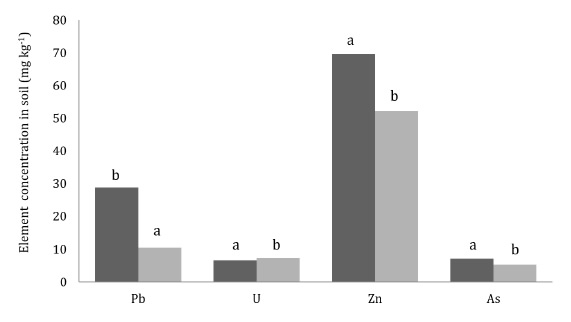
A significant effect of the soil depth factor was
found in relation to U, Pb, As, and Zn concentrations
(Figure 3).
Different letters indicate significant
differences.
Medias
que no comparten una letra son significativamente diferentes.
Figure 3: Mean values among significant element
concentrations in relation to land use (p≤0.05, n=36).
Figura 3: Medias de los elementos con concentraciones significativas según
usos de suelo (p≤0,05, n=36).
Pb, As, and Zn values were
notably higher at a depth of 0-10 cm, and only U values were higher at a depth
of 10-20 cm. According to the Handbook of Trace Elements, the total amount of
uranium in the soil ranges from 0.10 to 11.2 mg kg-1
(30). Uranium is released into the soil when rocks are
eroded by wind or water (2, 6). As an
element widely distributed in soils around the world, total soil concentrations
of Arsenic (As) range from 0.1 to 48 mg kg-1
(5, 13, 27). The
concentration found in this study is below the value of 12 mg kg-1 established by the CSQG, therefore it does not affect soil quality (12). The total concentration of Zinc (Zn) in soil ranges
from 10 to 300 mg kg-1.
Natural processes release a small amount of Zn, whereas human activities such
as mining and steel production account for its total amount (4). Significant concentrations of Zn were observed in
our study, ranging from 52.13 to 69.54 mg kg-1,
and were higher in the soil samples collected at 10 cm depth, with a difference
of 17.41 mg kg-1 between the two studied
depths. According to EPA guidelines (1992), these
levels of Zn do not exceed reference values for concentrations considered
phytotoxic.
It is essential to relate the presence of SOM
to these results, since concentrations obtained considering the depth factor
were significant. Compared to the value established in NOM-021-SEMARNAT-2000
(2002), SOM concentrations were high, ranging from 3.6 to 6.0%, for all land
uses and soil depths applied in this study. Soil samples had an average of 4.5%
SOM content at 0-10 cm, and 3.73% at 10-20 cm, representing a difference of
0.82% between both soil depths. In terms of land use, SOM concentration was
4.74% in restored land, representing the highest value, 1.03% more than that
for managed livestock production activities, which was 3.71%. A decrease in SOM
with agricultural and livestock production practices may be due to changes in
stocking capacity, removal of crop residues, and more rapid decomposition,
oxidation, and soil erosion processes. In contrast, an increase in organic
matter has been observed in areas where soil conservation practices are
developed (10). Organic carbon
and CEC are the two main factors that suppress the effect of toxicity on soil
respiration in heavy metal-polluted soils, with Zn, Cu, and Pb being the most
prominent elements (33). Humic and fulvic
acids derived from organic matter are beneficial because of their high
absorption capacity for various contaminants, including heavy metals, which can
result in their immobilization (22).
According to the guidelines set by NOM-147-SEMARNAT/SSA1-2004
(2007), the Pb and As contents we found do not
exceed the limits for agricultural use, which are 400 mg kg-1 and 22 mg kg-1,
respectively. The presence of these elements may be influenced by the origin
and composition of soil, as well as by the impact of human activities such as
livestock production and agricultural uses and external environmental factors.
The highest and lowest concentrations considering land use (for Th, Pb,
Rb, and Cu) and soil depth (for Pb, U, Zn, and As) may
be related to the natural composition and mineral structure of soil and human
activities. In this study, agricultural and livestock production activities
affected metal concentrations; however, except for Pb concentrations, our
findings were influenced by both land use and soil depth. In soils where
restoration and reforestation activities occurred, in addition to a higher
concentration of organic matter, there were lower concentrations of these
elements. Higher organic matter content implies greater nutrient availability
from mineralization of organic compounds, allowing for a higher rate of
microbial development, and consequently lower metal stress in polluted soils (34).
Two data groups were identified with component
analysis, which may explain the variation in the significant presence of
metallic and non-metallic elements based on the land uses and soil depths
assessed (Table 2 and
Figure 4).
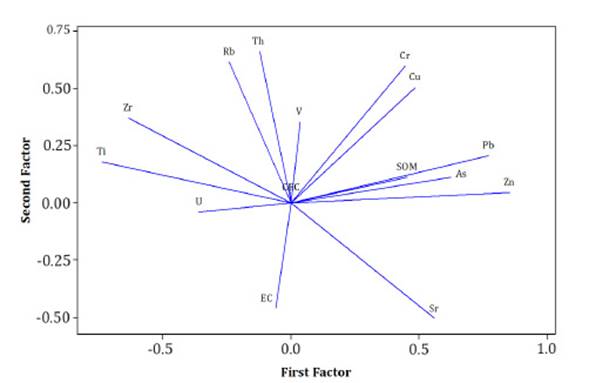
Figure 4: Loading plot of metallic elements, non-metallic
elements and soil properties derived from the factor analysis.
Figura 4: Diagrama carga de los
elementos metálicos, no metálicos y propiedades del suelo derivado del análisis
de factores.
This variation may be associated with the physicochemical
dynamics, composition, and loam-clay texture of the soil in the different land
uses, with Pb, Cu, Th, Zn, As and SOM being strongly
related to this variation. This may have an environmental impact on
homogeneity, primarily due to land use with livestock production and
agricultural activities, soil restoration practices, and soil conservation. The
percent SOM was significant in land with restoration practices such as
reforestation, rehabilitation of gullies, and regeneration of vegetation, among
others. This could be an essential factor in the oxidation, adsorption, or
retention of metals in soil. Assefa et al. (2020)
indicate that assessment of the physicochemical properties of soil associated
with overgrazing, absence or limitation of fallow periods, steep slopes, and
land-use management practices, is related to an understanding of soil status
and quality (10).
In the results presented in Table 3 and Figure 4, Factor 1 illustrates the data relationship explaining 38%
of the variance in our study, related to the soil samples with the highest
concentration of Pb, Zn, As, and Sr (positive charges) and of Ti and Zr
(negative charges). Factor 2 is associated with Th, Rb, and Cr (positive
charges) and with Sr and EC (negative charges), explaining 22% of the
accumulated variation.
Table 3: Variable loading coefficient (vectors) of the first
three factors using 15 variables related to land use (livestock management,
restoration, and land use without management or conservation).
Tabla 3: Coeficiente de carga de variables (Vectores), de los tres primeros
factores utilizando 15 variables de acuerdo con los usos de suelo (manejo de
ganado, restaurado y sin manejo o conservación).
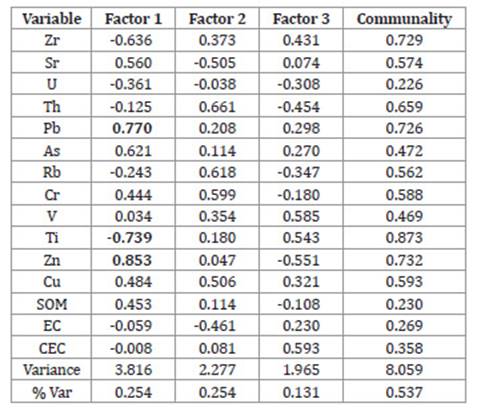
Factor loads in bold (> 0.70) are
considered highly weighted. SOM=Soil Organic Matter, EC= Electrical Conductivity,
and CEC=Cation Exchange Capacity.
Las
cargas de factores en negrita (>0,70) se consideran altamente ponderadas.
MOS (Materia Orgánica del Suelo), CE (Conductividad eléctrica), CIC (Capacidad
de Intercambio Catiónico).
Factor 3
explains 19% of such variation and was more closely related to CEC, V, and Ti.
Regarding the analysis of factors, the three determining factors account for
80% of the variation, indicating a relationship among soil properties (EC, CEC,
and SOM), land use and soil depth (Table
2 and Figure 4). The similarity analysis found relationships between
metallic and non-metallic elements and soil parameters of 58.64% to 88.98%,
with a particularly notable relationship between Zr-Ti and Pb-Zn (positive
charges). The lowest percentage, namely 58.64%, was observed between EC and the
rest of the elements and properties, 64.92% for CEC and V-Zr-Ti; and the
closest interactions were those between SOM with Pb-Zn-As and Cr-Cu (Figure 5).
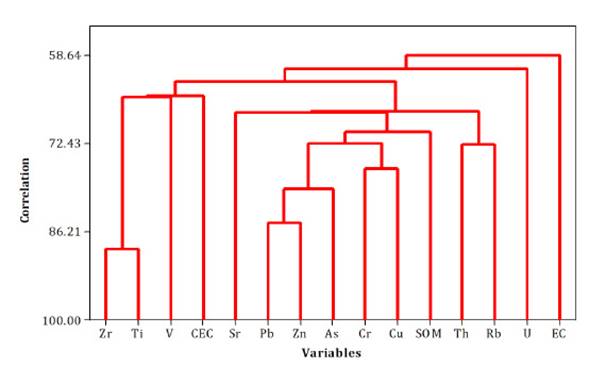
Figure 5: Dendrogram derived from the correlation
coefficient between metallic and non-metallic elements and soil properties.
Figura 5: Dendrograma derivado del coeficiente de correlación entre
elementos metálicos y no metálicos y propiedades del suelo.
This result is associated with the correlation
analysis presented in Table 1. Our results are consistent with similar PCA results and
correlations, indicating that elements such as As, Cr, Fe, Mn, and Ni could be
of lithogenic origin, while Cu, Pb, and Zn may be due to human influence (8, 39).
Conclusion
The land use factor related to livestock production, restoration and
conservation confirmed the presence of 12 metallic and non-metallic elements,
which may be attributed to the natural origin of soil and the dynamics of human
activities in the region studied. The SOM value was classified as high in
accordance with Mexican regulations for soils, principally due to soil
remediation practices that have had a positive environmental impact on
modulating heavy metals. Notably, As, Pb, and Zn levels did not exceed the
limits set by Mexican regulations and international references in soils with
these land uses. Based on technical considerations, the total concentrations of
Th, Pb, Rb, Cu, Sr, As, and Zn in soil were within
permissible limits. However, Ti, Cr, Th, U and As
exceeded the technical references for soil concentrations considered
phytotoxic. Livestock production practices had a notable impact on the
concentrations of elements such as Th, Pb, Rb, and Cu. Land use activities with
remediation practices and without management contribute to the low availability
of metallic and non-metallic elements in the studied region. These findings
underscore the need to continue technical research and monitor environmental
impact as related to other natural resources and land uses.
Acknowledgements
We are grateful for the support of Dr. Diana Meza Figueroa, Principal
Investigator C in the University of Sonora, Department of Geology, Division of
Exact and Natural Sciences and Dr. Nadia Valentina Martinez Villegas of the Institute
for Scientific and Technological Research of San Luis Potosi, IPICYT. Thanks
also to Cristina Lopez Razo, Idrissa Diedhiou, and Paul Bassoo for their
assistance with the manuscript in English.
1.
Agencia para Sustancias Tóxicas y el Registro de Enfermedades. (ATSDR). 1990.
Reseña Toxicológica del Torio. Atlanta, GA: Departamento de Salud y Servicios
Humanos de los EE.UU. Servicio de Salud Pública.
2.
Agencia para Sustancias Tóxicas y el Registro de Enfermedades. (ATSDR). 1999.
Reseña Toxicológica del Uranio. Atlanta, GA: Departamento de Salud y Servicios
Humanos de EE. UU. Servicio de Salud Pública.
3.
Agencia para Sustancias Tóxicas y el Registro de Enfermedades. (ATSDR). 2004.
Reseña Toxicológica del Cobre. Atlanta, GA: Departamento de Salud y Servicios
Humanos de los EE.UU. Servicio de Salud Pública.
4. Agency for Toxic Substances and Disease
Registry (ATSDR). 2005. Zinc. Public Health Assessment
Guidance Manual. US Department of Health and Human Services. Atlanta. 357p.
5.
Agencia para Sustancias Tóxicas y el Registro de Enfermedades. ATSDR. 2007.
Reseña Toxicológica del Arsénico. Atlanta, GA: Departamento de Salud y
Servicios Humanos de EE. UU. Servicio
de Salud Pública.
6. Agency for Toxic Substances and Disease
Registry (ATSDR). 2013. Toxicological Profile for Uranium. Atlanta, GA: U.S.
Department of Health and Human Services.
7. Ahmad, W.; Alharthy, R. D.; Zubair, M.;
Ahmed, M.; Hameed, A.; Rafique, S. 2021. Toxic and heavy
metals contamination assessment in soil and water to evaluate human health
risk. Scientific
reports. 11(1): 17006. https://doi.org/10.1038/s41598-021-94616-4
8.
Alcalá Jáuregui, J. A.; Rodríguez Ortiz, J. C.; Filippini, M. F.; Martínez
Carretero, E.; Hernández Montoya, A.; Rojas Velázquez, Á. N.; Méndez Cortés,
H.; Beltrán Morales, F. A. 2022. Metallic
elements in foliar material and fruits of three tree species as bioindicators. Revista
de la Facultad de Ciencias Agrarias. Universidad Nacional de Cuyo. Mendoza. Argentina. 54(2): 61-72.
9. Alengebawy, A.; Abdelkhalek, S. T.;
Qureshi, S. R.; Wang, M. Q. 2021. Heavy metals and pesticides toxicity in
agricultural soil and plants: Ecological risks and human health implications. Toxics. 9(3): 42.
https://doi.org/10.3390/toxics9030042
10.
Assefa, F.; Elias, E.; Soromessa, T.; Ayele, G. T. 2020. Effect of changes in land-use management
practices on soil physicochemical properties in Kabe Watershed, Ethiopia. Air, soil and water research.
https://doi.org/10.1177/1178622120939587
11. Bünemann, E. K.; Bongiorno, G.; Bai,
Z.; Creamer, R. E.; De Deyn, G.; de Goede, R.; Pulleman, M. 2018. Soil quality-A critical review. Soil Biology and
Biochemistry, 120: 105-125. https://doi. org/10.1016/j.soilbio.2018.01.030
12. Canadian Council of Ministers of the
Environment. 2001. Canadian soil quality guidelines for the protection of
environmental and human health: Summary tables. Updated.
In: Canadian environmental quality guidelines, 1999, Canadian Council of
Ministers of the Environment. Winnipeg.
13.
Castro-González, N. P.; Calderón-Sánchez, F.; Moreno-Rojas, R.; Tamariz-Flores,
J. V.; Reyes Cervantes, E. 2019. Nivel de contaminación de metales y arsénico
en aguas residuales y suelos en la subcuenca del Alto Balsas en Tlaxcala y
Puebla, México. Revista internacional de contaminación ambiental. 35(2):
335-348. https://doi.org/10.20937/rica.2019.35.02.06
14.
CONAFOR. 2009. El nuevo rostro de Monte Caldera. Restauración de suelos.
Revista electrónica de la Comisión Nacional Forestal.
15.
Covarrubias, S. A.; Cabriales, J. J. P. 2017 Contaminación ambiental por
metales pesados en México: Problemática y Estrategias de Fitorremediación.
Revista Internacional de Contaminación Ambiental. 33: 7-21.
16.
Diario Oficial de la Federación (DOF). 2002. Norma Oficial Mexicana NOM-021-SEMARNAT-2000
que establece las especificaciones de fertilidad, salinidad y clasificación de
suelos, estudio, muestreo y análisis.
17.
Diario Oficial de la Federación (DOF). 2007. Norma Oficial Mexicana
NOM-147-SEMARNAT/SSA1- 2004 que establece criterios para determinar las
concentraciones de remediación de suelos contaminados por arsénico, bario,
berilio, cadmio, cromo hexavalente, mercurio, níquel, plata, plomo, selenio,
talio y/o vanadio.
18.
El-Taher, A.; Abdel Halim, M. A. K. 2014. Elemental analysis of soils from Toshkibyusing instrumental neutron
activation analysis techniques. J. Radioanal. Nucl. Chem. 300: 431-435.
19. EPA. 1992. Guide to site and soil
description for hazardous waste site characterization, volume 1: Metals. Environmental Monitoring Systems Laboratory-Las Vegas Office of
Research and Development.
20.
García Sánchez, F.; Aguirre Rivera, J.; Villanueva Díaz, J.; García Pérez, J.
1999. Contribución al conocimiento florístico de la Sierra de Álvarez, San Luis
Potosí, México. Polibotánica. (10).
21.
Instituto Nacional de Estadística y Geografía (México). 2017. Anuario
estadístico y geográfico de San Luis Potosí.
22. Kennedy, S.; Kelloway, S. 2021. Heavy
metals in archaeological soils: The application of portable X-Ray fluorescence
(pXRF) spectroscopy for assessing risk to human health at industrial sites. Advances in Archaeological Practice. 9(2): 145-159. doi:10.1017/aap.2020.52
23. Kwiatkowska-Malina, J. 2018. Functions
of organic matter in polluted soils: The effect of organic amendments on
phytoavailability of heavy metals. Appl. Soil Ecol. 123: 542-545.
24. Lal, R. 2015. Restoring
soil quality to mitigate soil degradation. Sustainability.
7(5): 5875-5895.
25. Liu, L.; Li, W.; Song, W.; Guo, M.
2018. Remediation techniques for heavy metal-contaminated soils: principles and
applicability. Science
of the Total Environment. 633: 206-219.
26.
Loredo Osti, C.; Beltrán López, S.; Moreno Sánchez, F.; Casiano Domínguez, M.
2007. Riesgo a la erosión hídrica y proyección de acciones de manejo y
conservación del suelo en 32 microcuencas de San Luis Potosí
27. Luévanos Escareño, M. P.; Rangel Montoya, E. A.; Balagurusamy,
N.; Montañez Hernández, L. E. 2015. Impacto del arsénico en el ambiente y su
transformación por microorganismos. Terra Latinoamericana. 33(2): 103-118. [retrieved June 2, 2022]. https://www.redalyc.org/articulo.oa?id=57339210001
28.
Mahecha-Pulido, J. D.; Trujillo-González, J. M.; Torres-Mora, M. A. 2015.
Contenido de metales pesados en suelos agrícolas de la región del Ariari,
Departamento del Meta. ORINOQUIA. 19(1): 118-122. Retrieved June 29, 2022, from http://www.scielo.org.co/scielo.php?script=sci_arttext&pid=S0121-37092015000100011&lng=en&tlng=es.
29.
Martínez Chaves, P. A.; Betancourt Mendieta, A.; Nicolás Caretta, M.; Aguilar
Robledo, M. 2010. Procesos históricos y ambientales en Cerro de San Pedro, San
Luis Potosí, México, 1948- 1997. Región y sociedad. 22(48): 211-241.
30.
Nalbandian, H. 2012. Trace element emissions from coal. IEA Clean Coal Centre.
601.
31.
Pais, I.; Jones Jr , J. B. 1997. The handbook of trace elements. CRC Press.
32.
Reyes-Rodríguez, R.; Guridi-Izquierdo, F.; Valdés-Carmenate, R. 2016. El manejo
agrícola modifica propiedades y la disponibilidad de metales pesados en suelos
Ferralíticos rojos. Revista Ciencias Técnicas Agropecuarias. 25(4): 23-31.
33.
Ribeiro, B. T.; Silva, S. H. G.; Silva, E. A.; Guilherme, L. R. G. 2017. Portable X-ray fluorescence (pXRF) applications
in tropical Soil Science. Ciência e Agrotecnologia.
41(3): 245-254.
34.
Romero-Freire, A.; Sierra, M.; Martínez, F. J.; Martín, F. 2016. Is soil basal respiration a good indicator of soil pollution? Geoderma. 263: 132-139.
35. Sarwar, N.; Imran, M.; Shaheen, M. R.;
Ishaque, W.; Kamran, M. A.; Matloob, A.; Rehim, A.; Hussain, S. 2017.
Phytoremediation strategies for soils contaminated with heavy metals:
Modifications and future perspectives. Chemosphere Mar. 171: 710-721.
36.
Silva, S. H. G.; Teixeira, A. F. D. S.; Menezes, M. D. D.; Guilherme, L. R. G.;
Moreira, F. M. D. S.; Curi, N. 2017. Multiple
linear regression and random forest to predict and map soil properties using
data from portable X-ray fluorescence spectrometer (pXRF). Ciência
e Agrotecnologia. 41(6): 648-664.
37. Thornton, I.; Abrahams, P. W. 1983.
Soil ingestion-a major pathway of heavy metals into livestock grazing
contaminated land. The Science of the total environment.
28: 287-94. DOI:10.1016/S0048-9697(83)80026-6
38. Torres-Gonzales, Y.; Rojas-Carrizales,
A. G.; Salas-Contreras, W. H.; Hinojosa-Benavides, R. A. 2021. Fitorremediación de Suelos
Contaminados por Metales Pesados. Scientific Research Journal CIDI. 1(1):
25-36. https://doi.org/10.53942/srjcidi.v1i1.43
39. Udeigwe, T. K.; Young, J.; Kandakji,
T.; Weindorf, D. C.; Mahmoud, M. A.; Stietiya, M. H. 2015. Elemental
quantification, chemistry, and source apportionment in golf course facilities
in a semi-arid urban landscape using a portable X-ray fluorescence spectrometer.
Solid Earth. 6(2): 415-424.
40. USEPA. 2007 Method 6200: Field
portable X-ray fluorescence spectrometry for the determination of elemental
concentrations in soil and sediment. USEPA.
41.
Vidal-Solano, J. R.; Lozano Santa Cruz, R.; Zamora, O.; Mendoza-Cordova, A.;
Stock, J. M. 2013. Geochemistryofthe
extensive peralkaline pyroclastic flow deposit of NW Mexico, based on
conventional and handheld X-ray fluorescence. Implications in a regional context. Journal
of Iberian Geology. 39(1): 121-130.